Monday, February 22, 2010

Tallinn, End of Week 2.

Day 1: Old Town

Rob returns from Munich and reacts with surprise that I haven't already flocked straight for the tourist center of Tallinn; Old Town. This was due to the fact that I assumed like most tourist destinations, Old Town would hold very little of interest, he manages to convince me however that in this particular instance, I might be wrong.

Old town is a small, liver shaped slice out of the heart of Tallinn proper, completely encapsulated by a thick medieval wall, complete with ramparts and murder holes. Due to the absence of heavy bombing / artillery attacks during World War 2, the original structure of the medieval town is pretty much entirely intact around the outside.

My first glimpse of it through the misty Tallinn evening air, the city street leading up to the ancient gates adorned with ice sculptures of a swan and a dolphin make it look not altogether unlike something out of a Disney movie, The space inside the walls is a peculiar hybrid of modern and ancient, I see the first McDonalds since arriving in Tallinn just inside the gates, followed by a strip club and several boutique outlets that appear to be posterchildren for conspicuous consumption.

As we get a little closer to the center though this fades away to some fairly impressive architecture, a massive old tavern /restaurant complete with lit braziers and gothic font signs, amongst other buildings which look like the designs are something straight out of the fifteenth century. Dead center of the Old Town houses a wide open square adorned with all manner of fusion between the ancient and the new, the town hall complete with hard black iron shackles bolted to it's brick, various small cafes and restaurants, The oldest operational apothecary in Europe, established back in 1488, which now doubles as a museum, and lavish looking hotels.

We're heading toward a small restaurant called Kompressor located not far from where Rob used to live, when something makes him break into a chuckle as he tries to explain it. Apparently for some reason, someone here thought it'd be a good idea to have a bar, the theme of which is that it only plays music by Depeche Mode, in a textbook example of Estonian deadpan it is named simply "DM BAAR".

I don't quite know what to make of this yet but I think this may be emblematic of a wider theme I'm seeing here more frequently, if someone wishes to do something here, they don't tend to overthink it, they just do it. I can picture two Estonians sitting around a table having a conversation that went something like this;

"Would it be awesome if we owned a bar?"
"Bars are for posers"
"Yes but what if it was a bar that was not for posers, what if it was a bar that was *special*"
"That just sounds like more posing"
"What if it was self-consciously poser in a retro fashion?"
"Why Ülo, whatever could you mean?"
"Well, what if we only played Depeche Mode, for example?"

But, I digress.

As we sit in Kompressor and eat our very tasty pancakes, I get my first experience of a native drink called "Kali". Apparently it is made from fermented black bread and 0.5% alcoholic, however aside from the aftertaste, you would be extremely hard pressed to not think it was Coca-Cola.

Rob is telling me about the staff here being infamously rude, his example being that when he came here previously with a large group of friends and attempted to put two tables togther, the staff had given him a scolding in Estonian somewhat akin to what you'd expect from a mother addressing her teenagers.

"Excuse me, is this your apartment? No? Then why are you moving our furniture? It is very expensive you know, maybe next time you should ask for permission before you decide to take it upon yourself to rearrange the furniture."

The idea of it confuses me, all the more when from what I can see the staff seem perfectly ordinary and courteous, but then again, we didn't try to rearrange their furniture.

At the table next to us sitting around and chatting avidly amongst one another but entirely in a world of their own are nine similar looking Estonian blonde women, Rob uses them as an illustrative mechanism to point out how groups tend to be insular in this society; they go out to interact with each other, not their environment. I'm not entirely sure if none of them could speak English or none of them cared, but indeed, they were entirely oblivious to their surroundings and were intently focused only on the conversation amongst themselves.

We finish up at Kompressor and wander the streets of Old Town, I hear tales of the room in the inn where the devil was having a party, thrice boarded up when subsequent owners doubted the truth of the original rumor. Passing the old KGB building on Pikk, a large and I must grudgingly admit, beautiful church.

Exiting old town and coming upon a monument to a recent maritime disaster where M/S Estonia sunk betweeen Helsinki and Tallinn, 852 souls with her. Rob comments that in a population of 1.3 million, it was rare that noone knew at least someone from this group. It's an interesting statistic.

Rob was recently contacted by a complete stranger to me who had stumbled across this article and asked him if he knew who I was. This inspired me to check the analytics here and see just how many people were reading, it's a lot bigger number than I had imagined. I suppose it was only a matter of time before the general population tired of having their economies outsourced by large corporates to their economic advantage and decided that they wanted some of the spoils for themselves. How many of the people that have read this touch other people and will spread the ideas in some way? Time will tell.

When we finally arrive at Rob's place it's pretty late and I have to get home and finish off some work, but Triin has cooked up some wild boar and I get my first taste since I had wondered as an eight year old reading Asterix comics exactly what it would actually taste like. Pork, pretty much, that should come as no surprise but I'm so accustomed to being surprised by everything now something actually being predictable bears special mention at this point.

Day 2: Sushi, Toy dogs and Theological covers for gluttony.

Having made contact with a reader of this blog and being told that today is actually some kind of religious festival, the name of which unsurprisingly escapes me at this point, I cleave to the important part of the information, there are special, tasty buns that you get on this day and your excuse for eating them is that the church said it's ok.

I head out to the nearby streets with an appetite for irony buns and run across a tiny little dog intent on alerting his master to my presence, the current temperature is approaching -10C and I would have thought that such an animal wouldn't be a practical pet in this environment, but apparently I have much to learn about the survivability of extreme cold.

I come across a sushi parlour not a block and a half from my apartment and stop in to try some, it's extremely good, and this has been a pattern at all the sushi places I have tried over here so far, they also deliver sushi to you, which is absolutely unheard of back home. I get a card and resolve that at the earliest practical opportunity I will definitely be making use of this. Apparently there's another sushi parlour in Tallinn that has a specific theme to it, I lack suitable language to describe just what I'm talking about here, so I'll just give the link and be done with it. This is not a fabrication, I assure you, that place really exists.

Of course, they also deliver. Perhaps that's just normal here?

On the way home I stop by the bakery and get my ecumenically approved pastry treat with icing, I don't feel any more holy consuming it, and when I mentioned a religious festival to the establishment owner she looked at me like I might look at a door-to-door evangelical on a saturday morning at my front door, but when she figured out I just wanted a special bun she was quick to provide the goods. It was basically a finger bun in a different form factor, and tasted as such.

Back home to hack on oracle website I've been working on.

Day 3: Foreign exchange meetup

I come out in the morning for my daily stroll and with a little dismay note that I can actually mostly see the ground, it appears the snow has withdrawn a little, at least for the meantime. It makes walking quite a bit easier but at the same time it's something of a trap, as the snow melts it leaves patches of ice here and there which look much like normal snow, but have none of the traction properties one would expect from them. I learn to look out especially for the gaps between somewhat snowy and not snowy at all areas, and although my feet simultaneously lose the ground multiple times mercifully I am able to retain my "never fall over" winning streak.

Later on in the day I head out for a meeting I was invited to by Luiz and Daniel from Aqris, it's a collection of visitors from foreign lands, a significant amount of which appear to be exchange students. Walking to the venue, Vapiano in Solaris Keskus, I catch sight of what I later learn is the Estonian Opera, quite a beautiful building, all doric columns and grand windows and carvings.

Ice is everywhere and I don't well grasp how it is that the snow is actually melting, because to my senses, it appears that the temperature is actually decreasing. I see strange things such as large stainless steel columns with what looks like a spontaneous gush of water that just started pouring from the ceiling and flowed out onto the surrounding tiles before freezing solid. I'd love to know how such formations actually come to pass but can't muster the imagination to formulate a hypothesis through the -15C cold.

At Vapiano, meet a bunch of new people, it seems to be a very common theme that men end up in Estonia because they fall in love with Estonian women. I meet two people who fit this description on this particular night, I meet a guy who teaches foreigners Estonian, a visitor from northern Italy on her way home, a procurement manager for an Estonian bank regales me with tales of the hardware appetites of my fellow software engineers and the kind of criteria she uses to assess if their requests have merit.

Lastly I meet a girl who migrated from Cypress and studies law, she explains to me the basic premises of Estonian law, it seems a lot less complicated than it's common law based counterparts, I'd heard similar things before on this same subject, it seems that the civil law system used in much of Scandinavia is more based on actual legislation disregarding the importance of precedence as opposed to common law where precedence is accorded much more weight. It turns out that the biggest difference this person had noted between Estonia and her home country was a reduced focus on the superficial, so it looks like I'm not alone in this observation.

Day 4: Auto trouble

Rob calls up the next day to ask me to assist in shoveling his car out of the snow, we take a walk over to the first place he lived when he arrived in Tallinn, his wife's mother's apartment and proceed to dig the modern little vw out from beneath two solid feet of snow. I ended up discovering that for me personally the best way to get rid of snow was some combination of punching it into a well packed paste and then peeling it off and discarding it, it feels good to get out and be physically active again after so much time coding, after a few hours the task is done.

We head up to Triin's mother's apartment and settle in for dinner, my first experience with kefir, a strange drink not native to Estonia but widely popular, my current best explanation for it would be a thinner version of sour cream, intended for drinking. Needless to say the taste of raw kefir does not much appeal, but with a couple of teaspoons of sugar it starts to taste less like sour cream and more like vanilla yoghurt, which is much more tolerable. Apparently people here often mix it with kama, which is a grainy / cereal like mixture that when mixed with kefir ends up tasting not unlike what you'd imagine thin sour cream mixed with a large amount of bread crumbs might taste like.

Also on the menu is potato and pork, the potato here is actually yellow, Estonians appear surprised when I tell them the potato back in Australia is white, I have no idea why the difference in colour, but Estonian potato definitely tastes a whole lot better, as does the pork, it makes up for the unaugmented kefir / kama mix and then some.

On the walk back we go via Kaubmaja and I notice a 98,000 kroon 750 ml bottle of Cognac. I wonder how long it has been sitting there, and how long it will be sitting there in future. More to the point, what the point of such an object is at all here? Bored Russian oil magnates on holiday perhaps? Who knows. Hennessey, what is your business plan, please?

Day 5: Aqris super early pancakes

Arrive 6:50 am at the front door of the Aqris office, hitch a ride through the front door with a sympathetic native as the event is not due to begin till 7:15. 25 minutes early starts to matter a fair bit though when you're -15C. Looking around at the office I notice that the equipment they use is much the same as dev houses in Sydney use, it's interesting to come to a place with a radically different economy and budget and see what it has in common with someplace that does not have to be as stringent with their costs, it becomes apparent what is really useful and what is just gloss.

Pancakes are delicious, I talk to Hegle, a freelance usability expert and catch up with Daniel and Luiz, take photos out the back window of the trains coming and going, talk a little technology with Urgo and depart before I interfere with the workday for the rest of the team.

Day 6: Tartu

Andrei contacted me after reading my first post here and invited me to come see Tartu that following weekend, I took him up on the offer and head out for the bus stop, the whole thawing thing that I was worried about turns out to be a complete phantom. Snow has started falling more heavily than ever and the temperature has dropped to -17C. It is at this point that I realise the term "blistering cold" is less poetic license and more descriptive of reality than I had originally assumed.

That said, I still love it. Sometimes it makes me just want to sprint headlong into the howling snow and feel it cut deeper into me, when I get home and sit back and relax, feeling the chill seep out of my body and the blood flow returning to normal is one of the most pleasant things I have ever felt.

Perhaps another thirty years and I'll see things differently, but for now, I could not hope for better.

The bus ride from Tallinn to Tartu takes 2:45, there is free wifi on the bus, the surreal feeling of barreling along a deserted highway, fields blanketed with snow and fir tree forests in the distance, the edges blurred by snowdrift, wind whipping tiny zephyrs of white confetti across the entire scene whilst hacking away in a bus seat on my code is something that will not soon leave my memory.

After meeting up with Andrei he takes me on a full tour of Tartu, the larger part of the city proper is one big university, various faculties scattered all over the place, it's a much less hectic pace than back in Tallinn, a total population of approximately a hundred thousand

There are long tree lined footpaths, sculptures and statues are plentiful, there is even an ice sculpture of a tiger in the main town square directly next to another bronze of a pair of kissing students. The entire aura of the place is not dissimilar to what I have seen of Boston in movies, with the caveat that I have not actually visited anywhere in the states myself. Back home the closest thing that springs to mind is what I imagine a single huge usyd campus might look like.

In the central square of Tartu, Andrei tells me about an event not that long ago where a couple were filmed in flagrante delicto on the arch of a bridge at one end of the square across a river, the photos appeared in tabloid newspapers across the world. The local students were so amused by the event that they affixed a bed to the arch not long after in tribute. No word if anyone ever figured out who the culprits were, but Vana Tallinn made a conspicuous feature in the corners of the infamous photos.

Later on we go on a short tour of the surrounding area, first stop what is locally referred to as the nuclear cucumber plant. Apparently the power station for Tartu has enough waste heat and excess capacity that the locals were unsure what to do with it, not wanting to simply waste it however, they decided they'd establish a set of greenhouses complete with vegetables feeding off the waste heat / electricity from the station. It gets it's name from the eerie green glow it casts into the night sky of Tartu, although it is not in fact a nuclear power plant at all.

We also go to see the houses of the richest people in Tartu, for the amazing sums of 3-4 million kroons (approximately 300 / 400k AUD) these places look much like stately plantation households or English countryside manors. Another eye opening comparison, what counts for a fairly remote neighbourhood in the Sydney suburbs, say Minchinbury, a quick search of domain.com.au shows the upper end of properties starting around the 400k mark and going up from there. Andrei tells me that you can buy a totally decent good quality apartment in Tartu for around 70k AUD.

Stay or Go?

Still wanting to stay.

Disappointments

My disappointment is only kind of a disappointment; it's the kind of weakness that you say to a job interviewer when they ask you what is your weakness, one that interpreted correctly is actually a strength, but you spin it so you seem to have a heaping helping of humility and this particular hurdle is surmounted. EMT didn't call me when they fixed my phone.

They did however, fix my phone.

Positives

I'm beginning to feel quite attached to the mental state of the Estonian psyche. It would not be unfair to say that I came here fundamentally to be a hermit, although it would be simplifying far more than is sensible. But I find myself becoming one of those annoying, people loving humans. I empathise with the things people tell me here, I do not find myself surprised by their petty concerns; they do not seem to have any.

Monday, February 15, 2010

Tallinn, End of Week 1.

Explanation

For a while now for various reasons I have been dissatisfied with Sydney, Australia as a place to live. I'm well aware that a large majority of people already lose me there. Hang on, Sydney? Sunshine? Beaches? Beautiful, friendly people? Laid back inhabitants who would as soon look at you as buy you a beer? What's not to like?

When I tell them instead I'm moving to Tallinn, Estonia I get a few different kinds of responses. More often than not the response is confusion, being a country of barely 1.3 million people, the vast majority of people simply don't actually know that it exists. When a person is familiar with the place however, they're equally confused, but for different reasons; Why would you want to move to a cold, bleak ex-soviet backwater peopled primarily by dour faced reserved ice queens where the typical annual salary does not break a third of that in your home country? The most interesting response to me has been people that are familiar with both Tallinn and myself, quickly it'll be something like;

"Ahh, yes, I think you'll love it there"

With greater or lesser cautioning to figure out that I really know what I'm in for beforehand.

I've lived in Sydney for most of my thirty years of life, I'm intimately familiar with the culture and the personalities that it tends to generate, the political situation, the typical business attitudes that prevail, and every last little drawback it is probably possible to be aware of.

Internationally speaking, Sydney has an excellent reputation. The reasons I've already gone over and also what I believe to be an extensive focus upon a thin veneer of gloss gives Sydney an appearance that particularly shines at first glance. Most people would rather bleed than be rude to your face there, the laid back attitude is not just hype, but I've come to believe over time that it's mostly apathy dressed up as nonchalance.

Sydney has a very superficial / sales focused structure that is very much about appearances, I read a newspaper article a while ago commenting on hordes of gym toned bodies in their expensive clothing and cars sitting on some inefficient road somewhere barely breaking 10km/h on the daily commute to and from an office where they could mostly sit the day and look pretty / engage in watercooler babble in exchange for their paycheques. What you achieve is not so important than how you go about achieving it and how you look whilst achieving it.

It's a harsh sentence, and to be fair like everything else, it's not entirely true, I have loved Sydney much of my life, there are most certainly upsides to being focused as such, and if my impression of the vast gamut of humanity is anything to go by, I do indeed think that most people would be ecstatically happy with such an environment. I however have always been something of a stranger there, and as such have always been searching for a place that fit a hacker's soul.

Enter Tallinn.

If Sydney is a culture of gloss, Tallinn as I see it is a culture of substance, there is a social acceptance and focus that actually accomplishing things is much more important than how one appears whilst accomplishing them, women who by Sydney standards would be considered extremely glamorously attractive and might not ever have to do more professionally than being an executive assistant or some other low impact surface focused job I have seen at meetups entirely focused on the finer points of software development. Not only this, but they were engaged and interested and asking questions just like everyone else, and noone seemed to think that this was out of the ordinary at all.

On that exact same subject, technology is not something to be quickly glossed over and a huge episode made of the sales process after the fact, even from my brief professional interactions here, it is apparent that the product actually matters.

People here are not necessarily cloistered so much as they respect your privacy, I have had to ask a fair few general knowledge questions since arriving and had nothing but polite responses all around, but at the same time I have tried to adjust to some extremely poor situations based around my initial misunderstandings about the way things work here, my utter helplessness being quite obvious to anyone passing me by. However, critically; no one took it upon themselves to intrude upon me, helpfully or otherwise.

Critically for me at least, it is also one of the least religious places in the world. I strongly believe that religion and respect for religion breeds ignorance and mental decrepitude, Estonia is a good petri dish for testing this theory.

The cost of living is much lower and the quality of accommodation is much higher, I am currently living in a modern apartment with all amenities, internet, cable television, dead center of the city for the low sum of $530 AUD per month. The same setup without internet or cable television in Sydney would run easily north of five times that much. The quality of the internet connection is such that it could simply not be had in Sydney for any consumer accessible price, I have completely unlimited net on a DSL2 link for $40 AUD per month, the cable television package came entirely for free.

It's currently -9C, and outside my window I can see snow falling. This may petrify some but for me it's perfect. I cannot stand heat; I do not tan, I go straight from snow white to beet red, and walking even short distances in Sydney temperatures results in very uncomfortable body temperatures and exhaustion. I have been in Tallin now for five days, every single one of these days I have walked at least three km, with absolutely none of the ill effects I am accustomed to from such activity.

Although I've not had to deal with this particular aspect of life yet, it was a prime reason for my relocation, taxes here run a flat 18%, whereas in Sydney they very quickly graduate to the maximum 47.5% Once again an extremely large difference.

So, now that I've explained the reasons for my decision, this will be the first in a series of posts with regards to my experiences living in Tallinn, the series will be at least twelve episodes long, as that's the time I have booked my return tickets to Sydney and must decide if the experiment was a success or a failure, and if I stay or return to Sydney.

Day 1: Arrival

First step, organising the apartment, I had already corresponded extensively with the agent in advance in Sydney with the plan being to instantly settle into my new apartment as soon as I arrived, amusingly the first thing I did when I entered was try to pay my landlord and the real estate agent for the apartment, as after thirty hours in flight I wanted nothing more than to sleep for a year.

The reaction to my insistence at thrusting cash toward them was both amusing and educational, the real estate agent insisted on actually showing all the parts of the property, as if we had not already made the deal in advance, the landlord wanted to sit me down and draw out the exact itemised details of my account and draw attention to the neatly stacked pile of instruction manuals for all the appliances that came with the apartment. It was clear that they had a very set idea of how this should go down and my desire for sleep would not intrude upon that.

After having been subjected to the lengthy introductory process and signing the appropriate forms in duplicate, getting extensive lessons on how to turn the key in the front door and monitor my water and electricity usage, Rob, a friend of mine who had initially proposed Tallinn as a potential destination that addressed all my pain points with Sydney who has lived here for some time insisted that we go to the local shopping complex in order to sort out essentials, as my luggage had been lost in Paris on the flight over from Sydney, so I had little more than the clothes on my back.

Rob and his wife Triin dragged me half asleep to the local supermarket and we setup a prepaid mobile phone account for me, $25 AUD for 2gb prepaid 3g internet. This sounded like a really good deal at the time through my sleep induced haze, and to be fair it actually was. The problems only manifested when it stopped working the next day and I was introduced to the soviet "Rule is rule" mentality posessed of EMT Estonia's employees. But that's for tomorrow.

I grabbed a few more essentials and headed home, collapsing onto my bed after thanking Rob and Triin for their asisstance. I woke early the next morning and wandered the city from 3am to 7am, photographing everything that caught my eye, of which there were many things.

Day 2: Orientation

As I mentioned before my luggage had been lost in Paris on the way over so I was left with trying to sort out the washing machine, I've never been a particularly domestic person, but due to the fact that my landlord had so kindly provided me with exhaustive manuals for every single appliance in the abode, my hopes were high.

Unfortunately it quickly became apparent just how unfounded that optimism was, as I am not able to read either Russian or Estonian, which were the only two languages for most of the appliances in the apartment. Hell, I'm a technical person, I can figure this out, right? An hour later, I gave up and called the landlord, two minutes later his explanation had me going and my washing machine woes were sorted.

I felt just a touch of sympathy at this point for people who maybe couldn't figure out a user interaction I'd designed into some software.

I got a call from the airport sounding happy to tell me that my luggage had left Paris, but his tone immediately shifted into a concerned note when he mentioend that it had somehow managed to be held up in Stockholm and would be delayed another six hours, and I could expect it about 10pm that evening. As I already had clean clothes at this stage I was no longer too concerned, but this is a good cautionary tale for making sure that one's luggage is extremely well marked at all times I suppose.

First time grocery shopping, the first thing I notice is how much less expensive food is here than back in Sydney, I got 1.5kg worth of Salmon for under $20AUD, my entire shopping trip cost less than $100AUD and should cover me for the next week and a half at least. I am duly impressed with how economical their food arrangements are, but a little concerned that it might prove to be unpalatable at such a price.

This turns out to be completely unfounded as I can say without a shred of doubt that the quality of the food here leaves store bought economical food in Sydney for dead, the milk, fruit juice, meat, bread all taste extremely flavourful, I don't know what they put in this stuff but I hope they keep doing it.

My first brush with the unwillingness of the locals to intrude upon ones obviously bad choices ensues post my first shopping trip, here you buy bags yourself and load the groceries you purchase into those bags rather than the Sydney way where the groceries are bagged appropriately by the checkout staff as you check items out individually.

I wasn't sure exactly what to do here, but I made a critical assumption which turned out to be very wrong; Surely if I am doing the wrong thing, the checkout staff member will simply stop me and tell me what I'm doing wrong. That being my safety net I proceeded to just load the groceries into the bag, trying to do obvious stuff like keep the eggs and bread on top. It became quickly apparent that there was no way in hell that all these groceries were to fit in a single bag so I asked for some more.

I had noticed the staff member surreptitiously stealing glances at my activities, but no facial expression changes and certainly no vocalisations were actually made and so I assumed that everything was ok. After she had handed me another bag to fill up, I managed to fit everything into the bags and set off back home. I think I got about a hundred meters before the plastic started to tear, and the remaining three hundred meters home I had to stop every fifty meters to dig my fingers into knotted remnants of plastic that remained of the top part of the bags.

Fortunately the bottoms held and the content did not spill, mission accomplished, lesson learned, do not assume that anyone will tell you you're doing the wrong thing here. Payoff was the aforementioned cheap and excellent dinner, Salmon, mushrooms and egg in white wine.

Day 3: Work

I set up my workstation and proceed to get into my grails coding projects, this day proceeded as well as expected and largely uneventfully with the exception that I now realise just how much I had taken my previous setup for granted, my performance is extremely reduced by not having the ability to work with two monitors at once and I'll need to sort this out as soon as it's possible to afford another monitor, it looks like my options for this are much the same as back in Sydney, 230$ for a 1920x1080 21" monitor.

So, not *everything* is cheaper here. The rest of the month working on a single monitor is going to teach me to make sure I never have to deal with this particular situation again.

Day 4: Agile Estonia conference

Oliver from Aqris who I had contacted via the grails firms directory when I had decided to make my trip out here had invited me to a conference on agile software development methodologies, this was the first indication I had that my suspicions about fitting in here better than back home would come to fruition, the talks focused entirely on implementation details and justification, one of them actually made a heartfelt call to employing the scientific method in the pursuit of software development especially and is one of the best presentations I had seen in some time.

I made a few new contacts amongst the attendees of the conference and left happy. I walked out onto the nearest main road and waited for a cab to come by hoping to flag it down on the way, however this didn't happen and after about a half hour I was beginning to think that perhaps it wouldn't. I stopped a person and asked what the story was and they informed me that if I wanted a cab I'd need to call one, This was unfortunate as because of the aforementioned failure on the EMT service, I was unable to do so.

I walked another two hours following whatever I thought was interesting, snapping happy shots of multifoot long razor sharp icicles hanging from warehouses, snow decked pineleaf windowsills and an extremely pale ghost grey cat with no collar and piercing arctic blue eyes. I came upon a tram track heading in the same direction as I wanted to go and took the first tram out, 2.50$ later I was back 50 meters from home.

Stay or Go?

So far, definitely want to stay.

Disappoinments

EMT mobile for cutting me off a day after purchasing their prepaid plan, twice acknowledging via service calls that the disconnection was a mistake and ensuring me that it would be rectified within the next day, and twice failing to do so.

Positives

Everything else, even the episode with the groceries was a concrete example of just how much freedom I had to do as I pleased without the interference of anyone else, even if perhaps it was in a way that didn't turn out as well as it could have. The quality of the food has been the most obvious unanticipated advantage however, I am living more healthy than I have in as long as I can remember just because healthy food tastes plenty good enough that I have no desire to eat otherwise. I don't shy away from physical activity anymore as well, as I know it will feel good and I will see interesting things, the health benefits overall even in just this small window have been very eye opening and in a way that I hadn't foreseen.


Sunday, January 31, 2010

MacMillan; Subsidising the old with the new since 2010


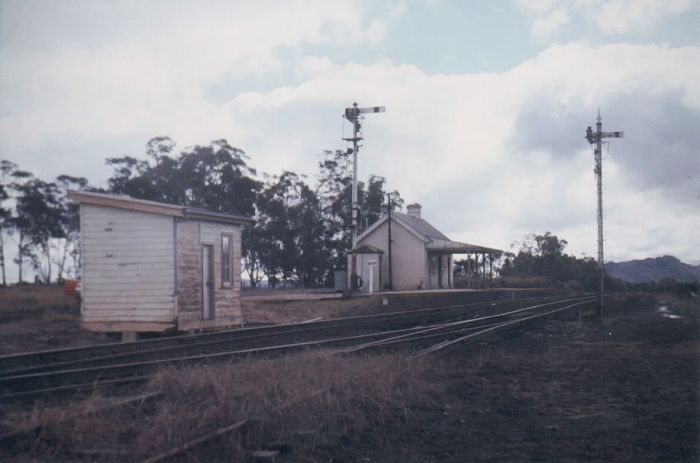
I spent the earliest part of my life in a pastoral village with a single road and a population well below a hundred. Originally it was formed in the early 1880s when the railway was constructed. My father sometimes talks of the days when rail travel across the country was par for the course with what sounds to my ears something like a mix between nostalgia and mourning.

I never really understood why that is, the railroads were simply superceded by more efficient forms of passenger transporation which made the idea of supporting a commuter transport network to such a backwater as Ben Bullen completely irrational. There's still an urban rail network supporting the far more densely populated Sydney basin, however no operating commuter stations like Ben Bullen exist any longer, despite the nostalgia of older generations.

People tend to have difficulty making a full critical analysis of the thing that they value in a given experience, a long trip on a train to an exciting, distant destination may have a propensity to infuse in a person some of the emotion that came with the journey onto the form of transportation itself, despite the fact that under examination, the two are very clearly separate.

Even (especially?) businesspeople have a habit of misunderstanding the nature of the market that they find themselves in, illustrated well by the decline of the commuter rail network industry serving small ports of call like Ben Bullen. People didn't want to catch trains, they wanted to get somewhere. The more immersed a person is in the implementation and details of their craft, the easier it is to get distracted or confused about the utility of what they're providing.

It takes a special kind of self awareness to step back and disassemble the entire intricate edifice, critically analysing as one proceeds. The kinds of companies that can do this today we label disruptors, and the kinds of companies that can't are scared to death of them. Like the railway corporations of the previous generation who thought they were selling train fares when they were really selling transportation, today's big publishers think they're selling sheafs of bound paper containing the printed word when they're really selling media.

"I'm not the bad guy, you're the bad guy, so ner!"

It doesn't make good press to be seen as a Luddite standing in the way of progress, so rather than outright opposing the inevitable advance of technology, those whose best interests have been served by hindering it prefer to work sideways. They cast themselves as the knight errant valiantly stemming the tide of the money grubbing "other" so that they might support the human capital invested so heavily in their little version of the status quo. It is not relevant whether they are conscious of this and it is a cynical tactic or if they truly believe it. From a strategic perspective; the end result is the same.

Shall we iterate the battles, and the epitaphs?

Blacksmiths;
Trade lobbyists for farriers petitioned in support of laws mandating separate roads for horse drawn vehicles and automobiles, attempting to stifle the burgeoning auto industry and squeeze a little more gold out of their dying trade. In the meantime other parts of the trade adapted and started making tires.

Music & Movie Industry;
Lawsuits, price fixing, payola, lobbying, red scare style propaganda pushing on the perils of copyright infringement, needing to be dragged kicking and screaming into the new world by a dispruptor, you get the idea.

News Industry;
A little closer to the mark, instead of proceeding through excessively litigious channels, rattling the sabre constantly about walling off their precious content whilst actually doing very little. It might be a tiny little bit less obvious what they were doing if they just actually said "Make us an offer, please, we're lost.". Disruptor in question completely misses the point and tells them all about robots.txt, hilarity ensues.

Book Industry;
Seeking to subsidise the printing press with the commercial advantage of eBook publication by not acknowledging the enormous economic disparity between the two distribution methods in their pricing. Someone could potentially sue me if I just out and out call it price fixing and/or tying, so I won't do that.

Conclusion

Amazon is not my favourite company, they are somewhat ham-fisted, as both the MacMillan, and the previous episode shows, but at the end of the day, they do tend to figure out the right path or the closest thing that is available to them given a paucity of options from the real culprit in this particular instance.

The one silver lining to the entire affair is that the illustrious alumni discussed above looks to be exactly the kind of place for a company like MacMillan to end up.

I like the idea of that.

Saturday, January 30, 2010

The iPad; Crazy like a fox.

A while ago now, I took the opportunity to go to a trade show and witness the way that end users interact with software. In this particular instance, I use the term "end user" quite loosely, as I am fairly sure the target audience in question has quite a bit of technical sophistry over the general end user populace. Nonetheless I found the experience extremely enlightening and I couldn't recommend doing so more heavily to anyone that has any pretensions toward designing and implementing software applications for other people.

I had been on the inside on this particular project and intimately familiar with the design and thinking through of the finished product, I had thoroughly absorbed all the questions that a first time user might ask so deeply that I forgot that they were not as obvious as the colour of the sky. But that is not the way people interact with new software at all, they do not experiment, they do not guess, when confronted with the unfamiliar they simply balk and adopt a puzzled facial expression.

They definitely don't buy it.

In the early days of my experiences with computers I had interacted primarily with them through the command line, when graphical user interfaces became the common interaction paradigm I had thought;

"Surely nothing could be easier than this"

I know a lot better now.

It's no secret that end users do not understand, but what the builders who target these people fail to realise is that they have no desire to understand. We have progressively trained our audience to expect that the market will conform to their inadequacies and cater to their handicaps;

Can't remember the command line switches?
We'll create a bunch of fields for you to enter in all the variables.

Can't remember what to put in the fields?
We'll give you all the possible options in a dropdown.

Don't want to scroll through all those options?
We'll give you an autocompleting text field.

Can't even spell a part of the word right?
We'll make it autocorrecting.

It's too bland and you can't focus?
We'll polish it so hard everything will be drop shadowed and glossed and replete with rollovers.

Can't remember how it works?
We'll tooltip every square pixel.

Can't be bothered to read the tooltips?
We'll research redoing the entire interface just so you don't have to think. Then write books telling other people how to do the same kind of thing, blatantly naming these books with titles like "Don't make me think"

Builders exist at the whim of people who, like Alexander's Bucephalus simply fear their shadow. A vanishingly small percentage of people are aware of this fundamental fact of the nature of our target audience, but the only way to tame this audience is to be aware of their pain points. They don't care about your spec, they care about getting done what the spec is aimed at getting done.

The ultimate user interface is a big, obvious, easy to press button that says "Do what I mean".

Apple thinks different.

Apple focuses on the destination, not the journey. It is not relevant in the design of an apple product such as the iPad how much memory the system has, or what frequency the processor runs at, it is only relevant that it can do what it is designed to do. In the case of the iPad, this means that it will play movies, read books, listen to music, and run applications that Apple has either expressly designed for the device, or had the advantage of explicitly approving beforehand as fit for purpose.

They don't "Fight Fair".

The evolution of musket warfare follows an illustrative trail; originally devised as an upgrade for massed pike wielding infantry formations, the tactics adopted for musket warfare were designed to maximise the benefits and minimise the drawbacks of the new technology. Massed formations slowly advancing toward one another toward the end of the era firing volley shots rather than targeting the enemy directly with the intent to break the line. A rate of approximately three shots per minute was the height of the technological mastery of the smoothbore musket.

Problem was, while some armies were building their skills in this narrow field, others were working on alternatives like rifling, breech loading, etc. Not very sportsmanlike when your side is only able to fire three volleys in exchange for your enemies twelve due to the enormously increased range of rifled over smoothbore muskets, but sportsmanlike doesn't win wars.

You think learning to use a mouse is no big deal? That guy in the suit who picks it up and tries to talk to it, that's your target audience. One would do well to remember that in this game. I may listen to the iPad's press video and roll my eyes at the "You can just reach out and *touch* it" marketing speak, but if my experience is anything to go by, that will speak to the target audience and they'll like what they hear. They won't mount an elegant defense about why it's a step forward in the evolution of human computer interfaces and anyone who says different is wrong; they'll just hand their money over, and from there, it's just a matter of time till the market figures it out.

They might win.

The iPhone has proven to be a tremendous success, there is a propensity amongst the technological priesthood to believe that this is in spite of it's flaws, but I have come to believe that it is largely because of them.

Is there a virus for the iPhone? Indeed, there is a virus for the iPhone, but it only affects jailbroken devices, the closest thing to an absolute dealbreaker in the device for the technological priesthood is the very thing that stops it afflicting the target audience with that which they fear the most in all other areas of computing.

Are there problems with disparate hardware or operating system versions / libraries within the iPhone ecosystem? Once again, the answer is no; precisely because of what is perceived to be it's achilles heel amongst it's competitors.

How about that piracy epidemic? Are App Store vendors feeling the heat? You get the idea.

Conclusion

Yes Comic Book Guy; I know you don't want an iPad and you think it's lame. Frankly, I don't want one either and I hope in spite of all of the above, it's a miserable failure. But I believe that the only way that this will happen is if the target audience has a genuinely better option from their perspective, not ours. If there is a choice between having to think about technology or having everything handed to them on a platter, I can think of no feature list comparison that is going to overcome the basic propensity for the target audience to discard the alternatives that require it to think.

Apple is offering decision free computing, and it's the only game in town for this purpose.

Sunday, May 31, 2009

09:00am Call Dell for price for replacement RW331 card (NVidia 8700m GT SLI, ebay prices range from 300-500$)

09:10am transferred, disconnected with "Too busy to answer your call please call back later" from IVR system

09:20am Call back.

09:30am Repeat

09:30am Call back.

09:40am Repeat

09:40am Call back.

09:50am Repeat

09:50am Call back.

10:00am Repeat

10:00am Call back.

10:10am Repeat

10:10am Call back, ask for direct number to parts department, request denied, transferred, disconnected again, this happens another four times until I finally get a line that keeps me on hold for 22 minutes.

10:42am Explain that I'm looking for a part to replace failed component on XPS m1730 notebook technician fails comprehension and instantly transfers me to technical support.

10:53 Line failure.

10:53 Call back. explain massive amount of prior disconnects, explain problem in exacting detail, explain product is out of warranty, explain need for simple price on simple component which I am well aware of the part number for.

11:24 transferred to parts department again, repeat previous explanation, says someone will get back to me within (line disconnects)

11:24 calls back, resummarise situation, transferred again.

11:54 repeat explanation to parts department again, someone will get back to me within 24 hours about a price for the component. No it is not possible for him to simply look up the price in inventory, no it is not possible to have the answer any faster than this, no there is nothing that can be done.

16:10 contact from Dell, resummarise situation, line drops out three times during conversation, call backs are almost instant, consultant barely intelligible.

16:14 Price for RW331 from Dell not including GST = $926 AUD, Question posed as to why this is available at approximately half the price or less from various sources throughout the 'net. Answer; We don't know, but that is our price, if you want to use it from somewhere else you're welcome to do so. Enquiry as to price of XM888 module, also compatible with the notebook in question (Dell XPS m1730) answer $2135 AUD not including GST. Note total price of current generation XPS m1730 from the dell store is $3499 AUD which includes a better video card than either of the requested priced replacement modules.

16:20 Decide to never purchase, support or recommend products from Dell.

The notebook in question is an XPS M1730, although quite a powerful system it has provided me with no end of troubles through my period owning it, but the final break point was when I made the tragic mistake of attempting to connect an S-video cable from the S-Video out port on the notebook to the S-video in port of a television, I realise in hindsight that this is in fact just crazy behaviour on my part and I should have known beforehand it would inevitably result in the frying of the video card module but hey, I like to live dangerously.

Another ridiculous episode with this system has been the battery. Discharged fifteen times before being unable to hold a charge. Because of the very high size and weight of the system it was almost never taken anywhere and thus left on mains power, but Dell assures me that this is simply the way that batteries work and nothing can be done about it, numerous other stories were found without much digging of similiar behaviour of even shelved backup batteries failing immediately after opening. Never charged or discharged, but out of warranty now because they were in reserve for a year.

After this final conclusion to this ridiculous episode I just absolutely dread to think what the hell anyone who had no idea beyond "hey there's all of a sudden fuzzy red lines on my $4000 laptop, can't you guys get this fixed for something approaching a reasonable price and approaching a reasonable time" would have had to go through to get to this conclusion.

I'm going to disassemble the system and oven bake the video card for a minute or so as soon as I can find the appropriate tools to do so, it can't get any worse than it already is, and even if the card is baked as a result I'll be needing a replacement module anyway, but I certainly won't be buying it from Dell.

In other news, now back to using my old Acer Aspire 5630 which has lasted over three years without so much as a hiccup. I think I'll stick to custom built desktops for my performance computing from here on in.

Thursday, April 30, 2009

GoGaRuCo Fist Shaking

Just in case you've been living under a rock for the past few days this is a pretty good summation of the situation so far.

I must admit that I was initially confused as to what the fuss was even about, and none of the avalance of commentary I've read from the start till now had changed that position. I thought Martin's post on the issue raised a fair few interesting points though that at least warranted formal consideration.

The take away point here really needs to be that people are responsible for their own reactions to things like this.

The power dynamic does not change this relationship, how often is the paradigm of the put upon geek bandied about in similar contexts? Ask your high school football team what they think of the social power of geeks as a group. Once you get done explaining the big words in your question, the result should make my point well enough.

The funny thing is if you had asked me about this issue a year or two ago I would've just shrugged in a completely nonplussed fashion. I never cared if women were interested in becoming involved in technology, it isn't that I wanted them to avoid it, I've worked under female managers at various tech companies before and to be honest one of them was about the second best manager I've ever had, she was the first manager I'd ever had that actually had the technical skills necessary to elicit due respect for her position, and I was not satisfied with any other management thereafter for about three years.

At the same time, we got saddled in that department with a woman who really did not seem to know anything about the job she found herself in. I don't know what possessed that woman to pursue this career path but I heard enough under the breath cursing from the aforementioned female manager that I didn't think it was just my sexism shining through with regards to my evaluations of her performance.

Now, though, I hack from home, meaning a large amount of the time I sit directly next to my significant other, and in a lot of cases the input of a feminine psyche is greatly desirable. Many times I've had to choose between two equally meaningless things to me and she took one look at them and made a strong choice in one direction and then explained the reasoning in a way that I'd not at all considered. Estrogen can be totally useful when you're attempting to write software that deals with humans because it gives you a nice perspective on 50% of them that over 90% of hackers don't have.

So yes, I care that female coders as a group might be offended by the content of the presentation, but I feel that that conclusion alone isn't sufficient enough to automatically condemn the presentation itself. It really is possible for otherwise decent and rational people to overreact to a perceived slight when in all fact that was absolutely never the original intention of the communication.

I understand that there is an inclination to then single out the communication as ineffective, but actually if it were not for this entire debacle of the various presentations I've viewed this week that would definitely be the one that would stick the most firmly in my mind. This is the very essence of what an effective communication is all about. This is exactly why the scourge of corporate blandness must be wiped from the face of the earth, because the nth time you've heard about synergising values for b2b return on investments, the first *syllable* of the line makes your eyes glaze over and your tongue hang slack from your jaw.

In light of this fact, and with the observance that noone seems to be actually of the opinion that any offense was *intended*, merely that it was perceived, is it not reasonable to give a little latitude to speakers in order to encourage experimentation designed to keep us awake during their talks? Even if it isn't perfectly executed?

Here's a thought experiment for you; What if the group taking unintended offense were entirely different, if there was a martyrdom slant in the talk with a picture of Jesus Christ with his crown of thorns focused on the face looking morose (This guy used to program in ColdFusion) and then the next slide he was running along the top of a couple of sand dunes with two legionaires in hot pursuit jumping for joy and clicking his heels with the thorny crown long since discarded (But then Rails set him free).

Was offense intended toward Christians? In the event that they were offended, would they be told to harden up a bit and take it in the obviously humorous fashion it was meant? Would we be asking if it mattered that they were offended or mattered that the intent was not to offend, but entertain and communicate effectively? Would their contributions simply be dismissed out of hand? Matz is a mormon, Larry Wall is an evangelical, these are things that would actually have some kind of bearing upon the community.

Wednesday, April 29, 2009

Why Apple actually does *not* suck.

This puzzled me for the longest time before I finally figured it out. My position basically ignores windows and puts it in the "you use it because the company who bought you a computer and subsidises your environment bought it for you" but maybe I could imagine some permutation of the same kind of argument for windows users, also.

I call it the Segway argument. ;)

Marathon runners, the type that train obsessively for days at a time, fly to exotic high altitude locales to starve their bodies of oxygen, etc, and are at the absolute peak of human conditioning, are quite capable of running very long distances without much effort, in fact a case could reasonably made to say that they actually enjoy doing so.

Try sell one of those people a Segway.

It will have no tangible benefit aside from getting in the way of that person, and in fact just the idea of trying to sell one to that market shows the entire thing for the charade it is. It is not designed to service people like that.

The thing is that you can fairly make an argument that Marathon Runners like that are probably wasting their lives / time developing that degree of ability simply to do something like get from A to B with a reasonable level of rapidity. Thus something like a Segway can actually make sense because it isn't targeted at marathon runners, but a completely different type of person.

Now I don't want to be overly bragging, but I am only comfortable speaking for myself in this debate so that is what I am going to do. Once you've been using Linux since 1994, keeping well abreast of all the changes and benefits that have been added to the platform between then and now. Once you've mastered that environment so thoroughly that the regex flows from your fingertips as easily as a normal user's expectation of a tooltip hover on a pretty OS X widget. Once you've become accustomed to the almost limitless flexibility and control of the platform, and all the niggling problems and voodoo that one must occasionally confront when dealing with such a fluid platform slips so silently into the unconscious competence basket that you cannot personally even define the fact that it actually requires any competence at all without thinking about it really really hard.

Once you've got all that, the idea of someone making a cut down variant based on the BSD code base and making everything "just work" instantly, providing a contiguous user experience, doing a ton of things that basically all group up under the heading of "eliminating the need to acquire any indepth computer literacy at all", the idea of switching to a mac is as puzzling to you as the idea of the marathon runner picking up a Segway.

The critical thing to take away though, is that this is all value neutral, the marathon runner is not a hero, he probably wasted a ton of his life and time that could be spent better elsewhere acquiring the conditioning and abilities allowing him to accomplish the feats that he can. The same could be said of people in my situation with regards to computers, I am prepared to accept that if something like OS X had existed back when I wanted a "real computer" in 1994, it would indeed have been a waste of my time to develop all these skills. Further fair arguments could be made that I've wasted a ton of time developing all those skills now when you can get it "almost" as good just by paying a little premium on top of your average computer's cost. I get all that, I want to be as absolutely non-elitist about this as I can be. Taking all the above information into account I can totally see how it makes sense for normal people, and even up to a threshold some pretty extraordinary people even in this particular sphere to choose OS X as a platform.

That is definitely something that was in my blind spot not long ago, just as surely as Segways were an utterly bewildering concept to a marathon runner, but I'm aware of it now. The fact is of course that your average person is generally a lot more interested in stuff like walking around and fitness than advanced computer science, thus the relative success rates of Segway and Apple Computer.

But just because that market exists, is real, and has genuine value propositions for a large swathe of humankind, should not be taken as a reflection of it's value for everyone regardless of experience or situation. People like me will probably always prefer what we've developed this intensely powerful unconscious competence in, and everyone else will look at us and say it was a waste to do that, and although I don't agree with that position, I can at least see how the conclusion would be reached and accept it.